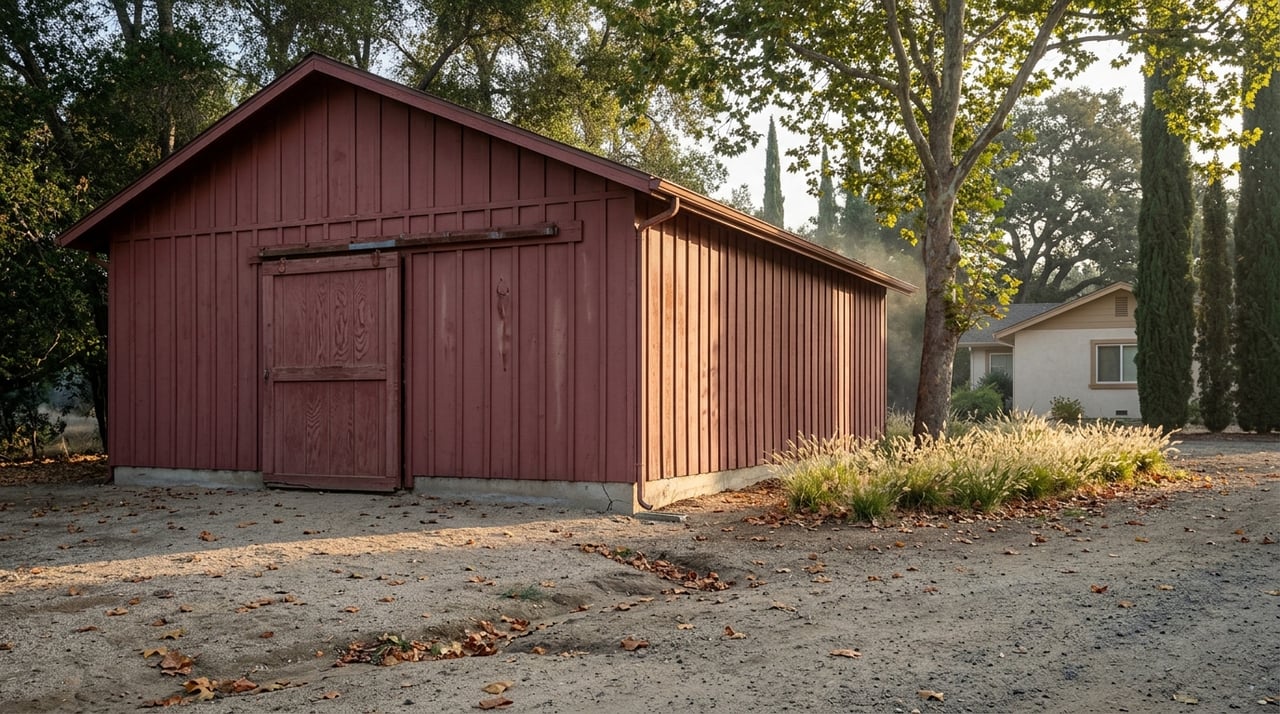
In one Yorba Linda case documented in a City of Yorba Linda meeting record, a property owner on Anna Marie Road asked for something modest: a variance to shrink a setback by a few feet so a small workshop could fit along the edge of the backyard, room enough for tools, a lawn mower, and a place to tuck a trailer out of sight. The land itself belonged to the family outright. What stood in the way was a strip of open dirt running along the property line, land they owned in fee but could not build across, because the city had recorded a private equestrian trail easement over it years before anyone thought to put a workshop there.
The easement did not change the property's zoning designation or shrink its lot size on paper. It was recorded in the title chain and is separate from zoning. For a specific parcel, the CC&Rs, recorded easements, and permit history can affect what may be done with the land. Zoning describes what the city allows, while parcel documents address additional restrictions. Buyers considering a Yorba Linda property should review both.
What the zoning code allows
Yorba Linda splits its large-lot residential land into a handful of zones that most horse buyers will encounter. Each one carries a different minimum lot size, as set out in the Yorba Linda zoning code, and with it, a different answer to whether you can keep a horse without asking anyone's permission first.
| Zone | Minimum lot size | Horses without a Conditional Use Permit |
|---|---|---|
| R-A | 1 acre | Yes, on lots 15,000 sq ft and larger |
| RLD | 39,000 sq ft | Yes, on lots 15,000 sq ft and larger |
| R-E | 15,000 sq ft | Yes, on lots 15,000 sq ft and larger |
| R-S / R-U | 10,000 to 15,000 sq ft | The City of Yorba Linda says an approved CUP is required. |
Once a lot clears that 15,000 square foot threshold in R-A, RLD, or R-E, the number of horses allowed scales up with lot size under the city's own table. Drop below it, and horse-keeping on an R-S or R-U parcel runs through a Conditional Use Permit instead of a simple confirmation. That means a public hearing before the Planning Commission, and Yorba Linda's municipal code gives the Commission 21 days after that hearing closes to act on the application. If your offer depends on keeping horses on a smaller lot, that timeline needs to be built into your contingency period, not discovered after the fact.
Barns and other structures used to house animals are treated as accessory buildings under the city's animal regulations, which means they're held to the setback standards of whatever zone the property sits in, and the more restrictive of the two standards wins if there's a conflict. The zoning map can confirm which zone a property falls into before an offer is written, but that answers only the first of three separate questions for a Yorba Linda horse buyer.
Zoning and CC&Rs address different requirements
Pull the CC&Rs directly from the HOA or county record, rather than relying only on the seller's disclosure summary, and review the animal-keeping section before the contingency period ends.
Trail easements and their effect on improvements
Yorba Linda's equestrian trail network connects neighborhood streets to staging areas like the Quarter Horse Staging Area and Casino Ridge before continuing into Chino Hills State Park. Some parcels have private trail easements, so buyers considering improvements should check recorded documents for applicable restrictions.
Since January 2, 2009, Yorba Linda's municipal code has treated private trail easements as permanent once recorded and off-limits to encroachment. Any fence, shed, or improvement placed on a recorded trail easement after that date runs against the code. Structures that predate the ordinance get more time, 60 days if the city values the improvement at $1,000 or less, up to 18 months for anything worth more, but they still come down eventually. The code describes an encroaching structure as a nuisance per se.
Ownership alone does not override an easement recorded across a property, because it exists independently of who holds the deed. A preliminary title report will usually show a recorded trail easement, but only on the exceptions page, well past the vesting information most people read first.
An easement outlives a sale. The fact that a seller used their yard a certain way for twenty years without incident tells you nothing about whether that use was ever actually permitted.
Why the equestrian premium isn't really about acreage
Citywide, Yorba Linda's single-family median moved somewhere between $1.2 million in the first quarter of 2026 and $1.4 million in the three months ending in May, depending on which window you measure. Equestrian-zoned properties on streets like Grandview Avenue, Villa Terrace, and Ohio Street have traded well above that range over the past two years, closing between roughly $1.9 million and $2.4 million on lots running from about four-tenths of an acre to a full acre.
Some of that gap is simply more land and more square footage. Buyers may also value clear documentation of permitted horse use. A seller who can produce a zoning verification letter, CC&Rs that permit horses, and a title report without an encroachment on the trail easement can help buyers assess a property's permitted uses. Reviewing those records during an inspection period can reveal a boarding restriction or easement conflict.
Financing follows the same pattern. A barn or riding arena is a special purpose improvement, and not every appraiser treats it as more than an oversized outbuilding when running comparables. An appraisal that undervalues the horse facilities can leave a buyer short on the loan they were counting on, which is one reason equestrian sales here tend to move at a different pace and reward buyers who line up an appraiser and lender with actual experience on this kind of property before they're deep into a contingency period.
What to pull before you write an offer
- A zoning verification letter from City Planning confirming the parcel's zone and exact lot size. The public zoning map and the parcel record don't always agree.
- The HOA's recorded CC&Rs, not the summary in the seller disclosure packet, checked specifically for language on horses and boarding.
- A preliminary title report read past the vesting deed, all the way through the exceptions section, for any recorded trail or slope easement.
- Any Conditional Use Permit history attached to the parcel, including past boarding approvals or code enforcement tied to animal keeping.
- An appraiser and lender with real equestrian property experience, contacted before an appraisal comes back light rather than after.
Frequently asked questions
If a previous owner built into a trail easement, does that responsibility pass to me? The easement stays with the land no matter who holds title.
How many horses can I actually keep on my lot? It depends on lot size within your zone. City code scales the allowance up as lot size increases past the 15,000 square foot threshold, so two properties in the same zone can carry different limits.
If you're weighing an equestrian purchase in Yorba Linda, or wondering what your current horse property is actually worth once its paperwork is accounted for, BK Platinum Properties has spent decades working this exact corner of Northern Orange County. Request a complimentary home valuation and we'll walk the zoning, the CC&Rs, and the title history with you before you're locked into a contingency clock.
This article is general information, not legal, tax or financial advice. Consult a qualified professional about your situation.