Picture a city where tree-lined historic streets meet a lively college scene, and weekend plans range from a museum talk to live music downtown. If that sounds like your pace, Fullerton may fit you well. You get a mid-sized Orange County city with strong community roots, plenty of parks, and solid transit connections, all within reach of major job centers. In this guide, you’ll learn how Fullerton feels day to day, which neighborhoods match different lifestyles, and what to know about commutes, schools, and local amenities. Let’s dive in.
Community snapshot
Fullerton blends a classic suburban feel with a true college-town heartbeat. California State University, Fullerton and Fullerton College anchor the city’s culture and economy, bringing arts events, lectures, and sports to the community. The compact downtown supports restaurants, bars, cafes, and venues that stay active into the evening.
Civic and cultural anchors include the Fullerton Museum Center, The Muckenthaler Cultural Center, the historic Fox Fullerton theater, and the Fullerton Arboretum. Together, they create a steady calendar of exhibitions, performances, and community programs. You will also find a broad mix of residents, from students and young professionals to long-time homeowners.
Major employers span education, healthcare, and public service. CSUF, local school districts, Fullerton College, and nearby medical providers such as St. Jude Medical Center are key contributors to the local job base. Retail and hospitality in downtown and along major corridors round out employment options.
Neighborhoods and housing character
Fullerton’s neighborhoods offer distinct rhythms. Here is how the city typically breaks down:
- Downtown and West Fullerton: Walkable blocks, nightlife, restaurants, and older apartments with some historic homes. Popular with renters and those who want an easy night out.
- Near the colleges: Student-focused housing, small apartments, and steady rental demand during the academic year.
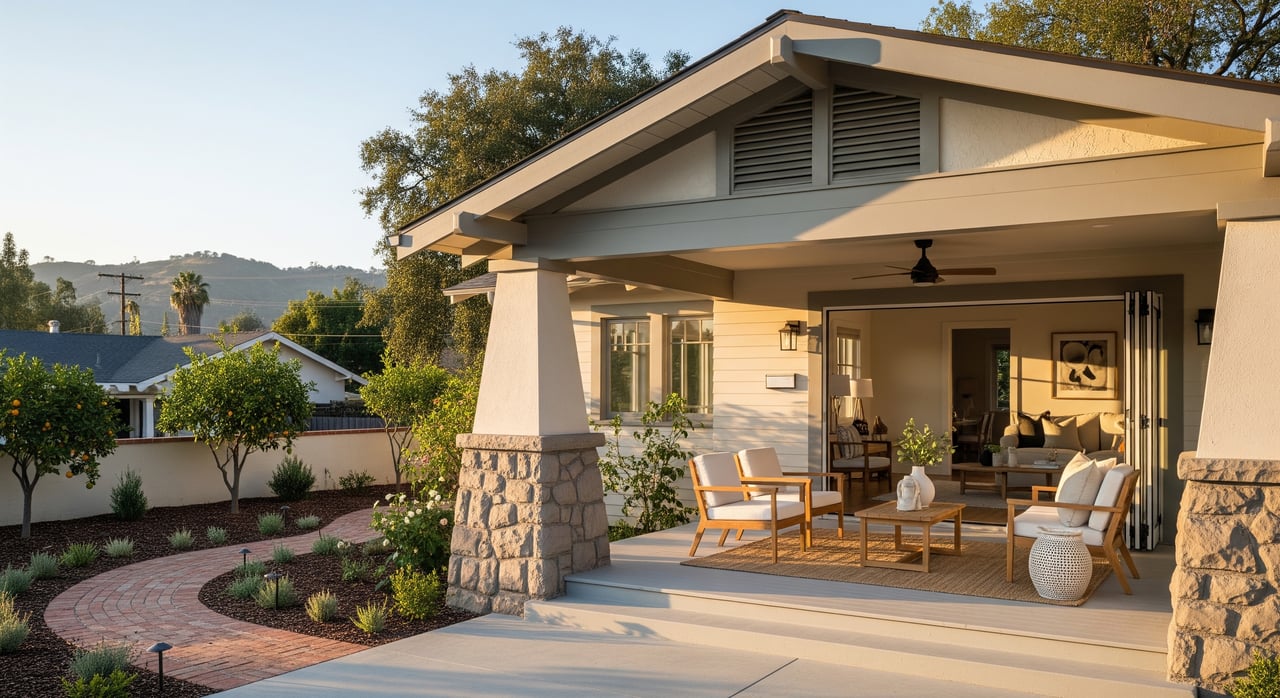
- Historic central neighborhoods: Craftsman and Spanish-style bungalows, tree canopy, and access to parks. Many buyers value the character and central location.
- East and southeast hills: Quieter streets with mid-century ranch homes and larger lots in places. A fit if you want more space and a suburban vibe.
- Newer infill and condo pockets: Mixed-use and higher-density buildings near major corridors and transit for lower-maintenance living.
Common home styles include early 20th-century bungalows, Spanish Revival, postwar ranch homes from the 1950s–1970s, and garden-style apartments. Newer mixed-use condominiums cluster closer to downtown and transit. Lot sizes vary by area, with many central blocks on modest parcels and hillside tracts offering more room.
Price positioning and market feel
Fullerton generally sits below the highest-priced Orange County coastal cities, yet above state and national medians. Prices vary widely by neighborhood and property type, and market conditions shift throughout the year. For current numbers like median sale price, days on market, inventory, and condo comparisons, check recent local MLS data and regional market reports from sources such as the California Association of Realtors or major research outlets.
Daily life and amenities
If you enjoy a blend of culture and convenience, Fullerton is easy to settle into. The city’s parks system includes neighborhood greens, sports fields, and standout destinations. The Fullerton Arboretum offers trails, native gardens, and seasonal programming. Hillcrest Park provides hilltop views, walking paths, and playgrounds, and you will find community classes and activities at the Fullerton Community Center.
Downtown is the dining and nightlife hub. You can grab coffee, try a new restaurant, catch a live band, or sample a local brewery. Beyond downtown, corridors such as Commonwealth, State College, and Fullerton Boulevard feature family-run restaurants and a range of cuisines.
Weekend plans often include arts and culture. The Fullerton Museum Center hosts exhibitions and talks. The Muckenthaler Cultural Center offers outdoor concerts and community art programs. The historic Fox Fullerton theater is a local icon for film and performance. Seasonal festivals, street fairs, and college events add to the calendar, especially during the academic year.
Shopping and daily needs are covered by grocery chains and neighborhood markets, with larger retail centers nearby. Brea Mall is a short drive, and regional destinations like South Coast Plaza are accessible for broader shopping.
Getting around and commuting
You will likely drive for many errands, though some pockets are very walkable. Fullerton is served by Interstate 5, State Route 91, and State Route 57, which connect to Orange County and Los Angeles job centers. As in most of Southern California, peak congestion is predictable, especially on the 91 and 5 during rush hours.
Transit is a strong perk. The Fullerton Transportation Center connects you to Metrolink commuter rail and Amtrak’s Pacific Surfliner for regional trips. Local bus service from the Orange County Transportation Authority provides routes within the city and to nearby communities. Many residents combine walking, biking, rideshare, and rail to manage commutes and weekend outings.
For travel, John Wayne Airport in Orange County is the closest major option. Long Beach Airport and Los Angeles International are within range depending on schedules and destinations.
Schools and higher education
Public school boundaries in Fullerton are served by local elementary, unified, and high school districts. Families typically review district websites and independent resources to understand programs, enrollment processes, and school offerings. Specialty options like advanced placement, arts, or language programs may be available, depending on the campus.
Higher education is a local hallmark. California State University, Fullerton offers public events, arts performances, and athletics that residents enjoy. Fullerton College also provides community classes and cultural programming, reinforcing the city’s learning-focused identity.
Healthcare and public safety
You have access to hospitals, medical centers, and clinics in and around Fullerton. St. Jude Medical Center is a prominent healthcare provider in the area, and you will find urgent care locations and specialty practices across the city.
When researching safety, many residents review the Fullerton Police Department’s annual reports and the FBI Crime Data Explorer to understand trends by category and area. Data is updated over time, so it is smart to look at the most recent releases and compare multiple years.
Who Fullerton fits best
Fullerton serves a wide range of lifestyles. Consider these quick matchups:
- Want walkable nightlife, cafes, and live music: Downtown and blocks near the colleges.
- Prioritize quiet streets and park access: Historic central neighborhoods and the hills to the east and southeast.
- Prefer low-maintenance living: Newer condos and infill communities near major corridors and transit.
- Commute to LA or OC job centers: Areas near I-5, SR-91, SR-57, or close to the Fullerton Transportation Center.
- Need more yard or interior space: Hill neighborhoods and mid-century tracts in the eastern parts of the city.
Tradeoffs to weigh
- Cost vs. proximity: Generally more attainable than some coastal OC cities, but still an investment compared with inland markets.
- Student energy: Vibrant near campus and downtown, with more rental turnover in those pockets.
- Walkability vs. car dependence: Downtown and select neighborhoods are walkable, while much of the city remains auto-oriented.
- Traffic reality: Strong freeway access comes with the usual Southern California congestion.
Getting local guidance
If Fullerton feels like a match, the next step is to align your wish list with the right neighborhood and property type. A local expert can help you refine priorities like lot size, renovation potential, commute routes, and access to parks or transit. For up-to-date pricing, inventory, and on-the-ground insight, connect with a team that knows Fullerton block by block.
Ready to talk about your move or learn what your home could sell for? Reach out to BK Platinum Properties for local guidance and premium, full-service support from search to closing.
FAQs
Is Fullerton a walkable city for daily errands?
- Some neighborhoods, especially downtown and near the colleges, are walkable for dining and errands, while most other areas are car-oriented with sidewalks and bike routes varying by corridor.
What are typical commute options from Fullerton to job centers?
- Many residents drive via I-5, SR-91, or SR-57, while others use Metrolink or Amtrak from the Fullerton Transportation Center, sometimes combining rail with rideshare or biking.
What types of homes are common in Fullerton?
- You will see Craftsman and Spanish-style bungalows, postwar ranch houses, 1960s–1980s tracts, garden-style apartments, and newer mixed-use condos near downtown and transit.
How do I evaluate schools when moving to Fullerton?
- Review local district websites for programs and enrollment details and compare independent resources for context, then pair that with a neighborhood tour to see proximity and daily routines.
What is Downtown Fullerton like on weekends?
- It is the city’s social hub, with restaurants, bars, cafes, and live music that draw students, locals, and visitors, especially on weekend evenings.
How can I find current home prices in Fullerton?
- Ask a local agent for recent MLS data and consult regional market reports for median prices, time on market, and supply trends to understand neighborhood-level differences.