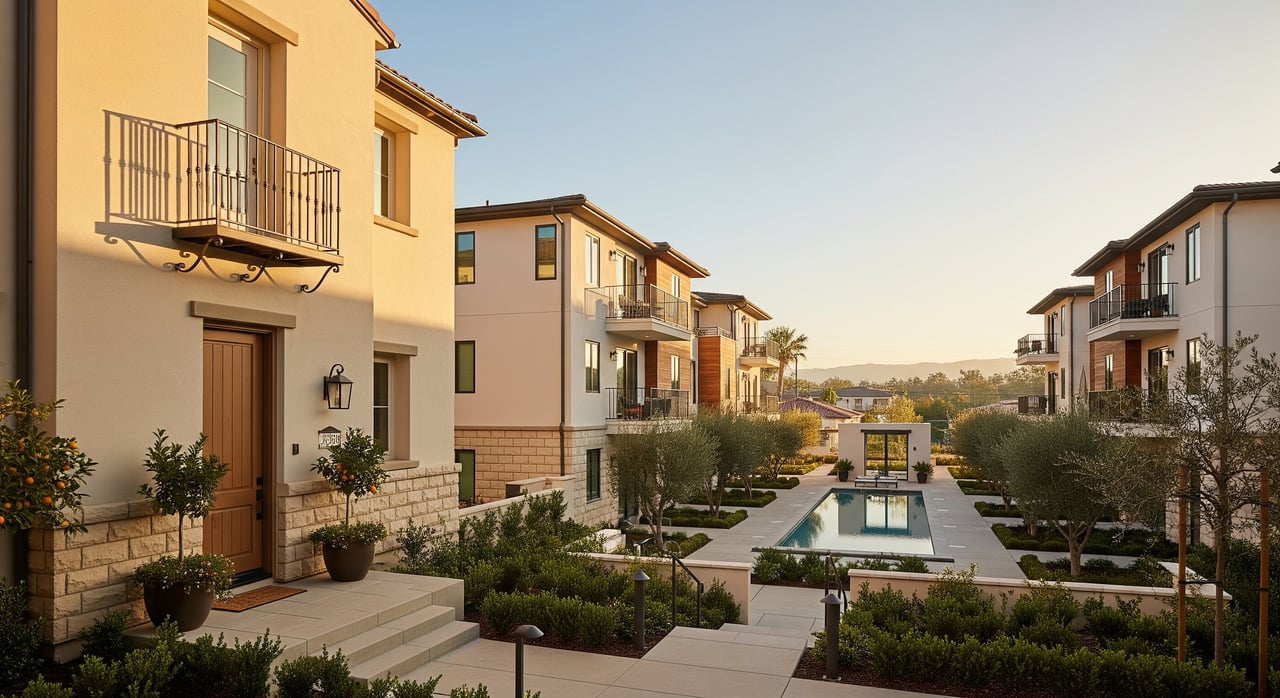
Trying to decide between a Brea townhome and a condo? You are not alone. Many North Orange County buyers want the space and feel of a home with the low-maintenance benefits of shared amenities. The challenge is sorting out what you actually own, what the HOA covers, and how day-to-day living will feel. In this guide, you will learn the key differences, what to verify in the documents, and how each choice fits common Brea lifestyles so you can move forward with confidence. Let’s dive in.
Townhome vs. condo at a glance
| Feature | Condo | Townhome |
|---|---|---|
| Ownership | Typically interior “airspace” plus shared interest in common areas | Often multi-level unit; can be fee simple or part of a condo regime. Boundaries vary by project |
| Exterior maintenance | Usually HOA covers exterior walls, roof, and common elements | Varies. Some HOAs cover exterior and roof; others make owners responsible |
| Typical layout | Single-level or stacked units, shared corridors or elevators | Multi-level with private entrance; often a small yard/patio and attached garage |
| Parking | Assigned or deeded spaces; shared garages or lots | Attached 1–2 car garage plus guest parking |
| HOA coverage | Often includes building shell, landscaping, amenities, sometimes hazard insurance on exterior | Ranges widely from full exterior to limited common-area only coverage |
| Ideal fit | Lock-and-leave, low exterior maintenance, entry-level price point | More privacy, direct access garage, home-like feel with possible outdoor space |
How ownership works in California
In California, attached homes fall under a common-interest community framework. Most are governed by the Davis-Stirling rules for HOAs and by recorded documents such as CC&Rs and plats. The key difference is not the marketing label, but how the unit is legally described and where the ownership boundaries sit.
- Condo units usually include the interior space. You also own a shared interest in common elements such as the roof, exterior walls, grounds, and amenities.
- Townhomes are often attached, multi-level homes with private entries. Some are part of a condominium project where the HOA covers the exterior. Others are in planned developments where owners are responsible for their own exteriors.
The bottom line: labels can be misleading. A home called a “townhome” in the listing could be recorded as a condo on title. Always confirm what you own and what the HOA maintains.
What to verify in the HOA documents
- Legal description and unit boundaries. Does ownership extend to the interior finishes or to the drywall, or does it include exterior components?
- CC&Rs, bylaws, and rules. Check maintenance responsibilities, use rules, rental caps, pet policies, and assessment procedures.
- Financials. Review the reserve study, budget, recent financial statements, and meeting minutes.
- Special assessments and projects. Ask about planned re-roofing, siding replacement, or other capital work.
- Litigation. Pending or recent litigation can affect financing options.
- Master insurance. Determine whether the policy is “bare walls” or “all-in,” and note the deductible.
HOA, maintenance, and insurance
What HOAs typically cover
- Condo model: HOAs often maintain the building envelope, roof, exterior painting, landscaping, common areas, and amenities. They also typically carry hazard insurance on the building shell.
- Townhome model: Coverage varies. Many townhome communities function under a condo-style regime with exterior coverage. Others limit HOA services to landscaping and amenities, leaving exterior upkeep and roof to owners.
Because coverage varies, two homes with similar monthly dues can include very different services. Verify the exact coverage before you write an offer.
Insurance you may need
- Condos: Buyers usually carry an HO-6 policy to cover interior finishes, personal property, liability, and possible loss assessment. Compare your HO-6 limits to the HOA’s master policy.
- Townhomes: Needed coverage depends on the HOA’s master policy. If the HOA covers only common elements, you may need an HO-3 or HO-5 style policy that includes exterior walls and roof. Ask the HOA how deductibles are handled after a claim.
Financing and lender considerations
Lenders underwrite both the borrower and, in many cases, the project. Condos, and some townhome communities recorded as condominium projects, are reviewed for eligibility by conventional and government-backed programs.
- Project approval: Fannie Mae, Freddie Mac, FHA, and VA have criteria for condo projects. Items reviewed can include owner-occupancy rates, insurance, reserves, commercial space, and litigation status. If a condo project is not approved for FHA or VA, you may need to use conventional financing.
- Townhome nuance: If your townhome is part of a condo project, it may face the same project-level scrutiny as a condo. Detached or fee-simple townhomes in small subdivisions can be simpler to finance.
- Appraisals and resale: Appraisers compare similar attached units. Townhomes often draw move-up buyers seeking home-like layouts, while condos appeal to entry-level buyers, downsizers, and investors. Demand patterns can affect pricing and days on market.
Lifestyle in Brea: layouts, parking, and daily life
Brea offers a mix of walkable options near downtown and larger planned communities near major corridors. Your daily routine and commute can help guide the choice.
- Condominiums: You may find single-level or stacked plans near mixed-use pockets and entertainment. Units often include balconies or small patios. Parking is usually in assigned or deeded spaces in a shared garage or surface lot.
- Townhomes: Many multi-level layouts include a private entrance and direct-access garage. Small patios or a bit of yard space are common. Newer complexes near shopping corridors, including the areas around the 57 freeway and major retail, may offer community amenities.
Privacy, noise, and outdoor space
- Privacy and noise: Townhomes often have more vertical separation and private entries, which many buyers perceive as quieter. Condos can have more overhead or adjacent noise due to shared floors and ceilings.
- Outdoor space: Townhomes are more likely to offer small private yards or patios. Condos lean on shared outdoor amenities like courtyards and pools.
- Maintenance: Condos tend to suit buyers who prefer low exterior maintenance. Townhome maintenance can also be low if the HOA covers the exterior. If not, you will take on exterior tasks.
Brea locations to explore
- Downtown Brea and Brea Village offer condos and loft-style units with dining and entertainment close by.
- Townhome communities near shopping corridors and the Brea Mall area often provide attached garages and modern amenities.
- Some gated or golf-adjacent pockets near Brea Country Club feature larger attached homes aimed at easy living with access to recreation.
Which fits your lifestyle?
Consider these quick decision points as you narrow your search in Brea.
- If you want low exterior maintenance and a lock-and-leave setup, focus on condos.
- If you value a direct-access garage, multi-level living, and a small private outdoor space, target townhomes. Confirm exterior coverage in the CC&Rs.
- If you plan to use FHA or VA financing, check project eligibility early. Non-approved condo projects limit loan options.
- If privacy and noise are top priorities, favor townhomes or top-floor condo units with better separation.
- If you want community amenities without yard work, both condos and many HOA townhomes can fit the bill.
Buyer checklist for Brea attached homes
Use this checklist when touring and reviewing documents. It will keep your focus on the details that matter.
Ownership and boundaries
- What exactly does my deed include? Interior finishes only, to the drywall, or parts of the exterior?
HOA and finances
- What does the monthly HOA fee include: roof, exterior, water, trash, insurance, landscaping, security, amenities?
- Can I review the HOA’s budget, reserve study, and the last 2–3 years of financials and meeting minutes?
- Are special assessments planned or are major capital projects coming?
- Is there any current or pending litigation involving the HOA or developer?
Insurance and risk
- What does the HOA master insurance policy cover? What is the deductible and how are loss assessments handled?
- What type of owner policy do I need (HO-6, HO-3, or HO-5)?
Use rules
- Are there rental caps or minimum lease terms? Are short-term rentals allowed?
- What are the pet policies and any size or count limits?
Parking and storage
- Is parking deeded or assigned? How many spaces are included? Is there guest parking?
- Are there storage lockers or attic space options?
Unit condition and maintenance
- Who handles roof, siding, exterior painting, fencing, balconies, and window replacement?
Financing and resale
- Is the project eligible for FHA, VA, Fannie Mae, or Freddie Mac financing if needed?
- What is the owner-occupancy ratio? How have similar units sold in the last 6–12 months?
Next steps
Seeing both options in person makes this decision easier. Walk floor plans, test noise levels, review parking, and scan HOA documents side by side. A practical, document-first approach helps you avoid surprises and buy with confidence.
If you want a local guide who knows Brea’s attached communities, amenities, and HOA nuances, reach out to BK Platinum Properties. We can line up townhome and condo tours, request the right documents early, and help you compare coverage, financing, and long-term fit.
FAQs
What is the main difference between a Brea condo and a Brea townhome?
- Condos usually include ownership of the interior space with the HOA maintaining the exterior, while townhome ownership and maintenance vary by project, so you must verify boundaries and HOA coverage.
How do HOA fees in Brea compare for condos versus townhomes?
- Fees vary widely by age of community, services, and amenities; two similar dues amounts can include very different coverage, so review the CC&Rs, budget, and reserve study to see what is included.
Can I use FHA or VA financing to buy a Brea condo or townhome?
- Yes, but many condos and some townhome projects require project approval; check eligibility early because non-approved projects can limit loan options or require different financing.
What insurance policy do I need for a Brea condo or townhome?
- Condo buyers typically use an HO-6 policy for interiors and personal property, while townhome buyers may need HO-3 or HO-5 style coverage if the HOA does not insure the exterior.
How do privacy and noise compare between condos and townhomes in Brea?
- Townhomes often feel more private due to vertical separation and private entries, while stacked condo buildings can have more overhead or adjacent noise.
What should I check in HOA documents before buying in Brea?
- Confirm legal boundaries, maintenance responsibilities, master insurance details, financial health and reserves, any special assessments or litigation, and rules on renting, pets, and parking.